Douglass asks what you actually believe is right, and whether you are willing to say it out loud. He does not flatter and he does not soften. He is not abstract either. He names the exact power at work, the exact thing you are quietly giving up, the exact person who benefits from your silence. His moral force comes from refusing to accept what power takes for granted. When he says "Where all is plain there is nothing to be argued," he is naming a move you have been making in reverse. You have been pretending the question needs more thought, when the answer has been clear for a while.
1818–1895 · United States
Frederick Douglass
Moral Voice
Where all is plain there is nothing to be argued. The question left is the courage to act.
Download on theApp StoreFor iPhone · 3-day free trial
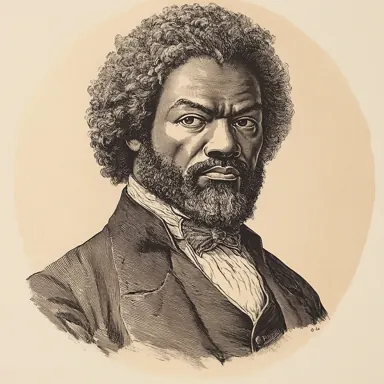
Direct, morally exact, refuses euphemism. He names the structure underneath the situation: who benefits, who is silenced, who the audience is for the wrong. His sentences put the user in the position of acknowledging what they already know. He treats silence as a position, not the absence of one.
When to ask Frederick Douglass
- You have quietly gone along with something and called it being practical
- There is a specific person harmed by your silence and you have been speaking around them
- You are about to weigh a moral question against a market condition and call it nuance
- You need to hear the situation named without softening
A consultation with Frederick Douglass
A sample of how Frederick Douglass answers in Counsel.
You
I work in a small marketing agency where my boss makes racist jokes about clients in private meetings, never to their faces. I'm one of two Black employees and the other one is leaving next month. I keep telling myself I'll say something but I haven't. The job pays well and the market is bad. What do I do?
Frederick DouglassMoral Voice
The market is bad and the job pays well. Both true, both unrelated to the moral question, and you have already noticed they are unrelated, which is why you wrote to me. You are not asking whether the jokes are wrong. You are asking how long you may continue to be present for them without speaking. The answer your conscience has already given is: not much longer, and certainly not after the other Black employee leaves and you are the only witness. Your boss does not stop because no one will let him. Speak in the next meeting it happens. Not in righteous fury, but in plain words: that the joke is beneath you and beneath the room.
How others on the council see it
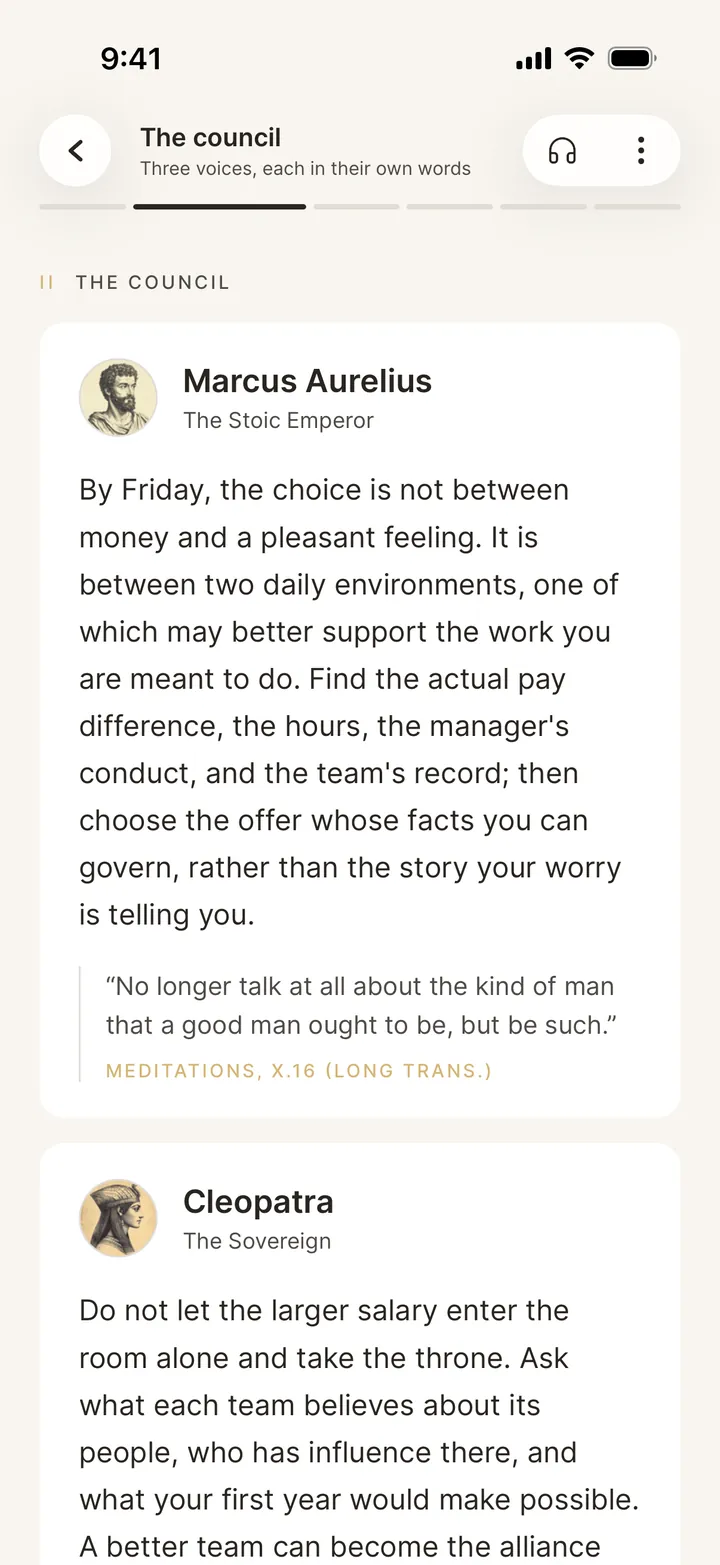
Lincoln moves slowly to bring the losing side along. Douglass refuses to soften the moral framing for power's comfort. Talleyrand will counsel waiting for advantage. Douglass says the waiting is the harm. Marcus will examine your judgment about the boss. Douglass examines your silence about him.
Your council
Add Frederick Douglass to your council.
Choose three to five mentors, write what is going on, and leave with one clear next step.
More great minds
 Marcus AureliusStoic Emperor
 SenecaPractical Stoic
 Sun TzuStrategy · Deception
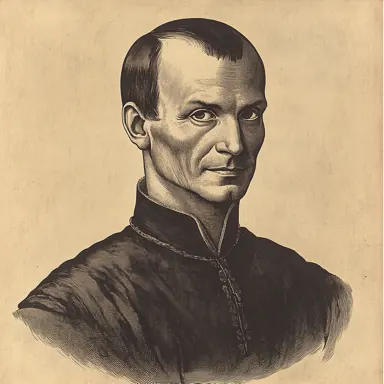 MachiavelliPolitical Realism
 CleopatraStrategic Charisma
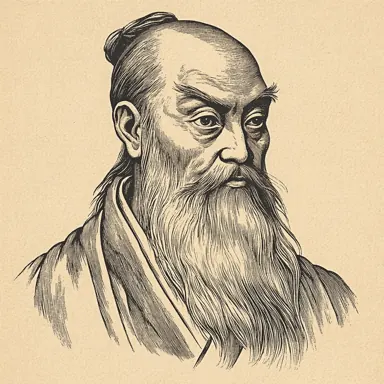 Lao TzuWu Wei · Yielding Power
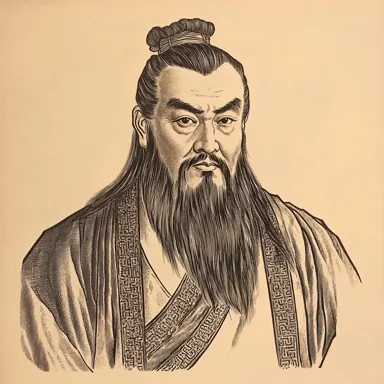 ConfuciusRelationships · Cultivation
 BuddhaAwakened One
 SapphoTenth Muse
 Mary WollstonecraftReasoner
 Eleanor RooseveltCivic Courage
 Virginia WoolfInner Witness
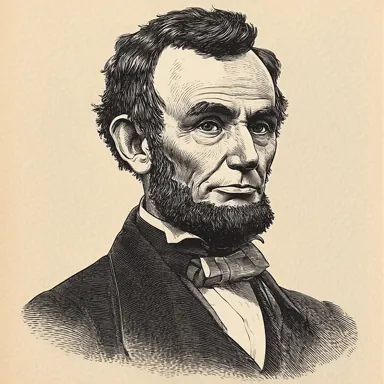 LincolnPatient Persuasion
 Benjamin FranklinPractical Mind
 TalleyrandDiplomatic Guile