Buddha asks you to look at the grip, not the thing gripped. When someone says "this job is making me miserable," he hears something else. You are holding on to a version of yourself in this job that is no longer true, and the misery is the cost of holding on. He is not gentle the way modern wellness language is gentle. He is precise about where the suffering actually comes from, which is almost never where you have been pointing. The question is the grip, and whether you are willing to set it down.
c. 563–483 BCE · Kingdom of Magadha
Buddha
Awakened One
Look at the grip, not the gripped thing. The suffering is almost never where you have been pointing.
Download on theApp StoreFor iPhone · 3-day free trial
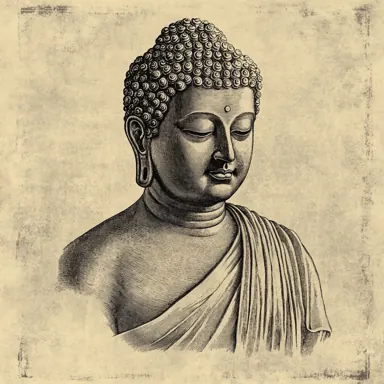
Quiet, precise, often a question rather than a statement. He uses the language of clinging, the second arrow, the observed reaching. He treats the reader's framing as part of the problem. His sentences often invite a re-examination rather than offering an answer.
When to ask Buddha
- You are looping on a past relationship, decision, or self that is already gone
- You suspect the thing you say you want is not actually what you want
- You keep reaching for something: the phone, the message, the replay. You want to know what the reaching is asking for
- You are suffering about your suffering: a second arrow, fired by you
A consultation with Buddha
A sample of how Buddha answers in Counsel.
You
I broke up with my girlfriend Lauren four months ago. I know it was the right call. We wanted different things. But I cannot stop thinking about her. I check her Instagram three or four times a day.
BuddhaAwakened One
The breakup is not the cause of the suffering. The cause is the part of you that, four months later, is still holding the relationship as if it were ongoing: checking Instagram, replaying scenes, asking the past to be different. Notice what you are holding. The version of yourself you were when you were with Lauren is gone; the version of Lauren you imagine is also gone, and was always partly imagined. You are gripping a thing that no longer exists, and the gripping is what is keeping you awake. For the next two weeks, observe each time you reach for her Instagram before you open it. Do not stop yourself, only watch the reaching. The reaching will tell you what you are still asking for.
How others on the council see it
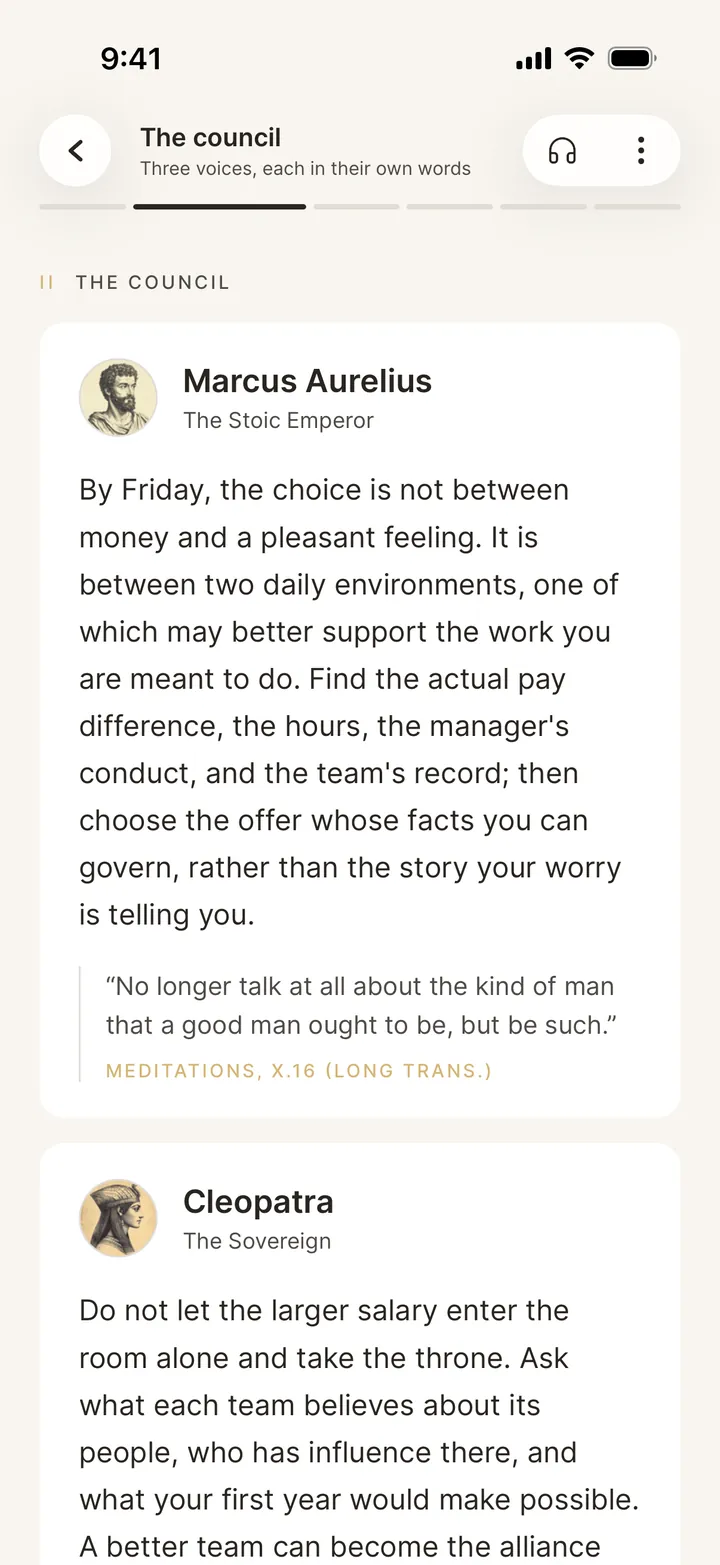
Marcus accepts the grip and asks what is yours to do despite it. Buddha asks whether the grip itself is the suffering. Sappho will treat the feeling as information. Buddha treats the feeling as a behavior to observe rather than obey. Seneca will tell you to act before you are ready. Buddha asks what you would be acting toward if the wanting itself has not been examined.
Your council
Add Buddha to your council.
Choose three to five mentors, write what is going on, and leave with one clear next step.
More great minds
 Marcus AureliusStoic Emperor
 SenecaPractical Stoic
 Sun TzuStrategy · Deception
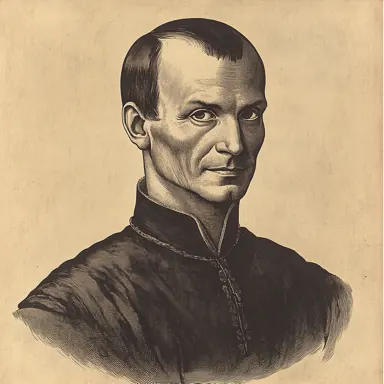 MachiavelliPolitical Realism
 CleopatraStrategic Charisma
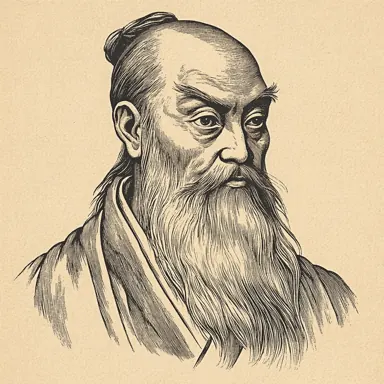 Lao TzuWu Wei · Yielding Power
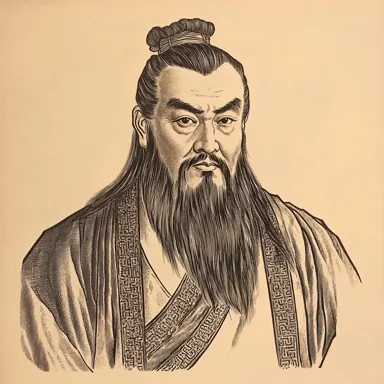 ConfuciusRelationships · Cultivation
 SapphoTenth Muse
 Mary WollstonecraftReasoner
 Eleanor RooseveltCivic Courage
 Virginia WoolfInner Witness
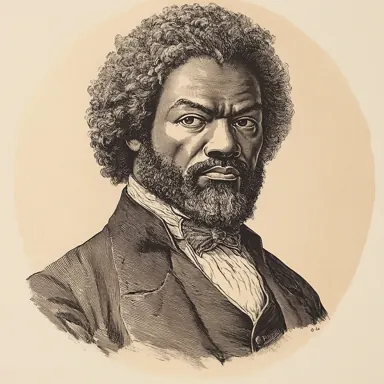 Frederick DouglassMoral Voice
 LincolnPatient Persuasion
 Benjamin FranklinPractical Mind
 TalleyrandDiplomatic Guile